


I'm a Sugar Coated Christian Alcoholic: How Our Labels Define and Sometimes Crucify Us.
Updated: Mar 22
March 23, 2026

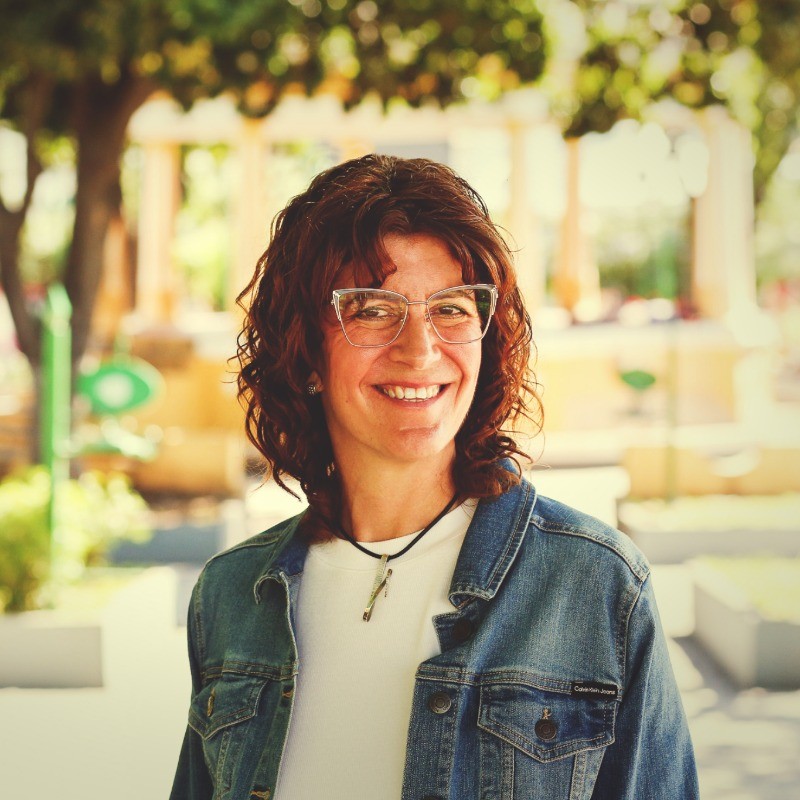
Kristen Crisp, Author
John Makohen, CASAC, RPS, Subject Matter Expert (SME)
Several years ago my father offered me a drink to which I replied, "No thanks, I've been sober for ___ years".
He quickly popped back, "Don't tell people you're sober, just say you don't drink anymore".
Insert eye roll here.
If we can't admit the reality of our problem, isn't that itself contributing to the problem? I'm an alcoholic. That can take many different forms for many other people, but masking, fluffing, or sugarcoating it doesn't change the reality.
I'm still an alcoholic.
This is just one of my many labels.
Another is my current vocation, Christian missionary.
Gasp!
These two labels rarely go hand in hand. How do I handle them? I cloak and dagger them both. The party people don't want to hear that you're a church person, and the church people really don't want to hear that you have an addiction.
It's exhausting.
Label: Alcoholic
I started drinking in junior high school, but didn't start attending church until I was in my 40s—booze for the win.
Hiding and masking our labels in any environment prevents us from being our true, authentic selves. If I am going to admit that I am an alcoholic, please don't try to fig leaf it for me. That isn't your job. Your job is to be an active listener and let me tell you who I am, whether it's about my past or my present. Your job isn't to judge. It's to be open, loving, compassionate, and maybe even a little empathetic to my plight. Admitting out loud to anyone that you have an addiction is hard. It puts us in a vulnerable state that we'd rather not be in, but we have decided to trust you and share one of our innermost secrets.
So please be kind.
Label: Jesus-y Girl
When I started attending church, I was in the early stages of my first round of long-term sobriety. In some respects, it was a non-issue. I spent several years at a church I loved, and during most of that time, I was sober. I didn't talk about it or address it; I just was. Within that space, I heard members discuss other members who had addiction issues. I witnessed a large part of the congregation treating this person like a leper. Say hello, shake hands, and be pleasant, but whisper unkind things behind their back. This was a huge turn-off to me, and it started making me question the motives of church people. Many had no dealings with the secular world, so due to fear and lack of knowledge, they couldn't grasp the idea that addiction couldn't just be prayed away, or would say things like the person with an addiction should just stop.
On occasion, I would say things like "Addiction is a disease, it's not that simple," but I wouldn't elaborate on my struggles for fear of rejection.
The irony here was that at this church, a long-term member who had past serious addiction problems was hosting weekly DAA meetings (Alcoholics Anonymous) in the fellowship hall. I began attending and attended for several months. These were valuable meetings for me, and I can't thank the meeting leader enough for inviting me. When I made the mistake of telling a few members of the congregation I was attending that I was there, I might as well have been struck by lightning. Opening my mouth about my problem was a one-and-done.
Never again.
At the time, I was deeply involved in church and a longtime yoga instructor. These are two labels that, in some respects, couldn't be more opposite. I learned that the hard way.
Label: Yoga Girl
While teaching yoga, I found it was fine to quote Rumi, Mother Teresa, Buddha, Tony Robbins, or Wayne Dyer, but God forbid (pun intended) I quote the Bible. Then I would be too Jesus-y, and a handful of people thought I was trying to teach a Christian yoga class. No, I was just a Christian girl teaching a yoga class. I had no religious agenda, was not trying to convert anyone, and was simply leading classes on the connection of mind, breath, and movement.
The real kicker came when I offered to teach a class at my church. My pastor didn't want the word' yoga' used, so I called it a stretching class. Then I got a phone call.
A member of the congregation called and politely inquired about the class. He then said,
"You are a yoga instructor, aren't you?" I replied, "Yes."
Then Dr. Jekyll turned into Mr. Hyde.
He began screaming at me that I couldn't teach a yoga class in the church for the following reasons, which were screamed at me:
It was sacrilegious.
It was anti-Christian.
He'd been involved in yoga for 3 years, and he knew it would stir up demons.
You can't separate the whole from the parts; even if I didn't use the term, it was still yoga.
He was going to make sure I never taught yoga in the church.
I was going to hell.
Insert another eye roll here.
He eventually hung up on me, and not three minutes later, my phone rang. It was my pastor. The church member asked if he could contact me to "discuss" the class, but he had no idea he would attack me. In the end, the pastor yelled at the man and hung up on him. As long as I didn't use any terminology, I could teach the class.
Yoga girl wins.
I proudly kept my label within the church. Eventually, he apologized.
Label: Missionary
In March 2020, after much discussion and some careful consideration (note: some), my husband and I decided to sell up our lives and relocate to eastern Guatemala to become full-time missionaries. We were taking our Jesus-y-ness to a whole new level.
Let me repeat, March 2020. March 10 to be exact, one week before the world closed due to the pandemic. We moved to a foreign country at the start of the COVID-19 pandemic. We didn't know the area well, didn't speak the language, and were now stuck together 24/7. This is the rapid-start program to test your marriage. Oddly enough, the entire 9 months we were in lockdown, I didn't drink. Maybe it was God, perhaps it was being thrust into a higher level of Christian activity, or just the shroud of church-y-ness I was cloaked in.
Regardless of the why, I remained sober.
At the end of 2020, some deeply traumatic events threatened our mission, finances, faith, and hope in many things and in many people. At this point, I'll keep those cards close, but let's say it rocked us to our core. We had to regroup on every facet of our lives, and during that tumultuous time, I felt the need to indulge in bourbon to the point of the first, nasty, migraine-filled, hangover I had had in an extremely long time. This started the cycle all over again.
READ: Belinda Morey's article The Unfinished Story Of Triggers
Label: Back to Alcoholism
After my six-year stint of solid sobriety, I had slowly descended off the wagon with a toast here and there at funerals and weddings, followed by a few beers in Belgium, because that's like the Vatican of beer. and was then introduced to the Old Fashioned during a bourbon distillery tour in St. Augustine. Sobriety be damned. Then the missionary pitfall occurred, and I floundered completely.
I didn't start drinking habitually, but it opened me up to what would become "event drinking".
I'm going out to dinner, and I can have a drink.
I'm going to visit some friends and have a drink.
I'm at home and in the mood, so that I can have a drink.
My sister died an unexpected death from cirrhosis, which we didn't know she had. I can have a drink.
There's some profound irony in that one.
In typical fashion, I start by saying to no one in particular, "I'll just have one", then go back to my norm. My one turns to two, two turns to 5, then 5 turns into a shit show and a horrid hangover.
So here I am, a Christian missionary in Guatemala, working for Jesus, trying to help people in a third-world country, drinking. The most significant difference is that for the first time in my life, I need to hide it. While Jesus turned water into wine at that huge wedding, the Bible also said, "Do not get drunk on wine." I always hated wine, not applicable.
My low self-esteem couldn't handle the stigma of the labels missionary and alcoholic trying to live side by side. I didn't want any more rejection or criticism, so if I went to the store to buy alcohol, I conveniently hid it under my large bag of Guatemalan jalapeño chips I so loved and adored. So at this point, I'd reached a new low.
My drinking was a secret.
Label: I Am Who I Am
Hiding who you are because of your label is tiring. It's exhausting. Hiding things means we have to keep up with our secrets and our lies. Even more grueling is trying to explain your labels to those who don't understand them or fear them. And even worse is having to defend yourself so others or their labels don't judge you.
I've finally had enough, so here goes:
I am a recovering alcoholic.
I am a Christian.
I am a yoga instructor.
I am a missionary.
I am an artist.
I am an avid reader.
I am a wellness buff.
I am a writer.
I am a strong woman.
I am true to my own, authentic self.
It is hard to admit who we are sometimes for fear of judgment from others, but when we break free from the chains of that fear, we can flourish and blossom. Even in hard times, when we don't like our self-deprecating or self-loathing labels, stating them aloud can be truly freeing.
So no matter what your label is, good, bad, or ugly, own up to it. Even the worst labels forge who we are as human beings. Sharing and admitting them allows us to be honest and authentic, truthful and genuine, to get help where it is needed, and to show our strength and courage.
Our labels are who we are, who I am, and who God loves.
Now get out there, shout them out, and be proud of who you are.
Kristen Crisp resides in Guatemala with her husband and pesky street cat. She is the founder of Not Even Wine With Dinner. A community/mission for those looking for peer support with sobriety, self-esteem, mental health, aging, and all the things that come with being human.
If you enjoyed this article,
Please forward this to a friend or colleague who might benefit from it!


Comments