


How Do You Help Someone Trust Again After Trauma?

Updated: 1 day ago
Author of the Month
September 21, 2026
Tammy Adler Foeller, Author, Founder & Executive Director, OpenDoor Women's Recovery Alliance
Tom O'Connor, Publisher
60-SECOND TAKEAWAY
Treatment matters, but supportive relationships can be equally important to sustaining recovery. |
Trauma can make isolation feel safer than connection, which means trust cannot simply be requested - it has to be earned. |
Small, repeated acts of reliability can challenge the expectation that people will leave, disappear, or give up after a setback. |
Healing may begin when ordinary people keep showing up long enough for safety, belonging, and connection to feel possible again |
I had no idea how profoundly relationships could shape a person's life until I walked through my daughter Stephanie's struggle with addiction.
Like many families, we focused on finding the right treatment, counselor, program, and resources. Those things mattered, and they saved her life more than once. But over time, I noticed something else.
The people surrounding Stephanie mattered just as much as the treatment she received.
When healthy, supportive relationships surrounded her, she began to believe in herself again. Over time, I came to recognize one of the earliest warning signs of relapse.
Stephanie would begin to withdraw. She stopped reaching out. She isolated herself from the people who loved her. Whenever I saw her retreat into isolation, I had learned to recognize it as one of the earliest signs that the disease was beginning to whisper to her again. I started to realize that recovery wasn't only about stopping the use of a substance. It was about rebuilding the connections that addiction had stolen.
Looking back, I realize I didn't fully understand what I was witnessing then. Years later, as I learned more about trauma and the brain, the science finally caught up with what I had seen firsthand.
While Stephanie was in active addiction, she didn't seek healthy relationships. She sought isolation.
Addiction told her to hide. It whispered that no one would understand, that no one could be trusted, and that asking for help was dangerous. Over time, the disease convinced her that being alone was safer than being known.
Yet isolation is exactly where addiction grows strongest. If addiction thrives in isolation, perhaps healing begins by helping someone find the courage to trust again.
But how do you ask someone to trust when life has given them every reason not to?

At OpenDoor, we never ask a woman to trust us simply because we say we're trustworthy.
Trauma has taught her to be cautious, and often for good reason. We honor that. Trust isn't something we ask for—it is something we earn- one small interaction at a time.
We:
Keep our promises.
Show up when we say we will.
Remember birthdays.
Celebrate new jobs.
Sit beside women in courtrooms.
Answer the phone after setbacks.
Don't disappear after relapse.
Don't give up.
Keep showing up.
Don't expect trust to be given. We understand it must be earned. Trust isn't built through grand gestures.
It's built through hundreds of small, consistent moments.
Trauma is unpredictable. Healing is predictable.
Every Tuesday evening, our Trusted Companions show up. Not because they have all the answers.
Simply because they said they would. Trauma tells a woman that people leave.
Every kept promise quietly tells a different story.
This is where OpenDoor is unique.
We don't ask a woman to place all of her trust in one person. We invite her into a small community of four or five trusted.
Companions who consistently show up. Together, they create something many women have never experienced before—a circle of dependable relationships.
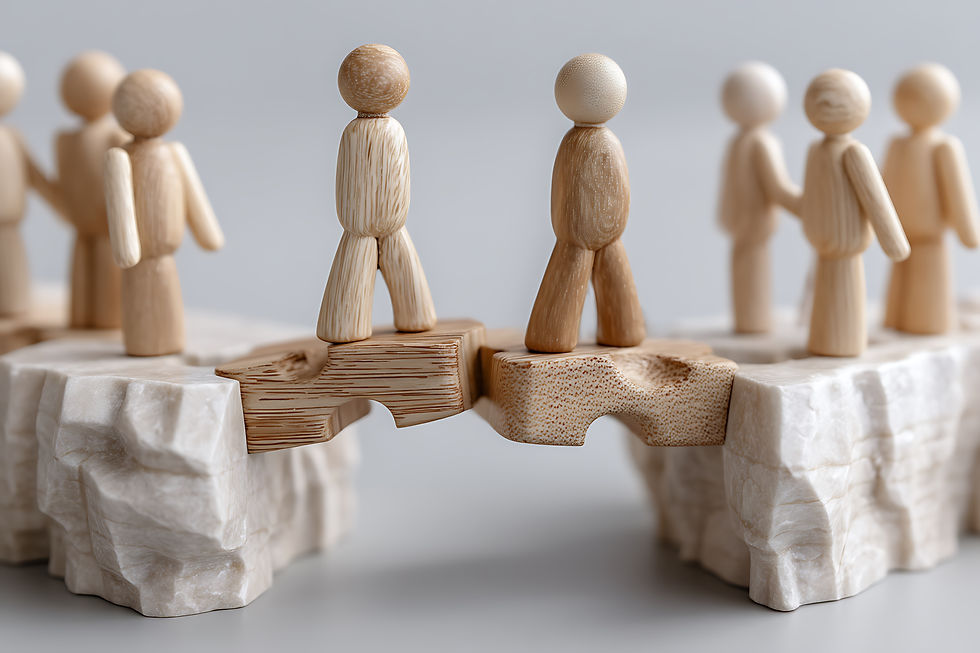
One trustworthy relationship begins to restore trust. A community of trustworthy relationships begins to restore a person's belief that healthy relationships are possible.
Trust is built when our actions consistently tell a different story from trauma.
Slowly, without realizing it, the participant's brain begins to say ~ "Maybe these people aren't leaving."
Then: "Maybe I can tell her this."
Then: "Maybe I'm not alone."
That's neuroplasticity in action. Not because someone explained it. Because someone lived it alongside another human being.
Trauma may begin in many different ways, but it almost always leaves people feeling alone. Whether through shame, fear, betrayal, or loss, trauma convinces us to withdraw from the relationships we need most. Trauma and addiction both thrive in isolation. Healing requires something incredibly difficult—risking connection again.
Relationships can cause profound hurt. They can also become the source of profound healing.
That's one of the great paradoxes of trauma, and it's exactly what OpenDoor addresses: not by asking women to trust everyone, but by creating a community where trust can be rebuilt, one relationship at a time.
Every. Kept. Promise. Every Tuesday evening. Every difficult conversation. Every moment of grace after a setback.
None of these moments seem extraordinary on their own.
Little by little, trauma loses its voice to:
You matter.
You are safe.
You belong.
Perhaps that's how healing begins—not with extraordinary moments, but with ordinary people who simply keep showing up.
Read Tammy's bio by clicking her icon at the start of this article.
If you enjoyed this article,
Please forward it to a friend or colleague who might benefit from it.


Comments